11.11 67%OFF
EXCLUSIVE OFFER
11.11 67%OFF
EXCLUSIVE OFFER

SUPPORT AVAILABLE 24/7
Customer Support
How can we help?
Get help with your order, download, Kontakt library or license.
Contact
Need assistance?
Quick verification
Play C · E · G
Chat
Kontakt · downloads · orders · licensing
FAQ
Installation & Kontakt
How do I install the library? +
Extract the library to the location of your choice. Open
Kontakt 8.13.1 Full, go to
Files, locate the library folder, then
double-click the .nki instrument or drag it
into Kontakt.
The .nki loads the instrument. It is not a
license-registration file.
Still need help? Contact support ↗
Do I need Native Access? +
No. This library is distributed as a non-Player third-party
Kontakt library without a Native Instruments serial number.
It does not need to be activated in Native Access. Load it
directly from Kontakt's Files browser.
Still need help? Contact support ↗
Which Kontakt version is required? +
Use Kontakt 8.13.1 Full or a compatible newer
Full version. The free Kontakt Player is not sufficient for
unrestricted use of this library.
Still need help? Contact support ↗
Why does Kontakt show DEMO mode? +
This usually means the library is being opened in Kontakt
Player rather than Kontakt Full. Non-Player libraries require
the Full version. In Player, Demo mode may stop the instrument
after approximately 15–30 minutes.
Still need help? Contact support ↗
I opened the .nki but nothing happens. +
Wait a moment before trying again. The library is large, so
Kontakt may need time to load samples and build the interface.
A delay before the interface appears can be normal, especially
on the first load or from a slower drive.
Still need help? Contact support ↗
The interface is missing or does not load correctly. +
Open Kontakt's Files browser, navigate to the
original library folder and load the correct
.nki again. Once the instrument opens
correctly, save your project so the correct path is retained.
Still need help? Contact support ↗
Kontakt says samples are missing. +
The library may have been moved, renamed or incompletely
extracted. When Kontakt asks for the samples, choose
Browse for folder and select the main
extracted library folder. Once the samples are found, save
your project again.
Still need help? Contact support ↗
I moved the library to another drive. +
Open the .nki again from its new location using
Files. If Kontakt asks for missing samples,
point it to the new main library folder, then save the project
again.
Still need help? Contact support ↗
The instrument loads but I hear no sound. +
Confirm that Kontakt receives MIDI input, that the instrument
is on the correct MIDI channel and that the audio output is
active. Also allow the sample loading process to finish before
testing playback.
Still need help? Contact support ↗
Kontakt says the instrument was created with a newer version. +
Update to Kontakt 8.13.1 Full or a compatible
newer Full version. Older Kontakt versions may not open
instruments saved with a newer Kontakt engine.
Still need help? Contact support ↗
Can I use the library in my DAW? +
Yes. You can load Kontakt as a plug-in in your DAW. For
troubleshooting, first test the .nki in Kontakt standalone,
then reopen it inside your DAW once everything loads correctly.
Still need help? Contact support ↗
Download & storage
How large is the download? +
The compressed download is approximately
480 GB. Because extraction requires space for
both the archive and the extracted library, keep at least
960 GB of free storage — approximately
1 TB — before extracting it.
Still need help? Contact support ↗
The download or extraction fails. +
Confirm that the download completed fully and that at least
960 GB of free storage is available. If the archive is
incomplete, download it again. Do not move, rename or modify
files while extraction is still running.
Still need help? Contact support ↗
Can I install the library on an external drive? +
Yes. A fast SSD is recommended for large Kontakt libraries.
Keep the library in a stable final location and avoid changing
the folder name after your projects have been saved.
Still need help? Contact support ↗
7-day free trial
How does the 7-day free trial work? +
Depending on the offer currently available, you may be able to
download and try a Kontakt demo free for 7 days.
No charge is made when the trial starts. The selected Kontakt library is charged automatically when the 7-day trial ends.
You can cancel your trial at any time before it ends to avoid being charged.
During the 7-day trial, you can also change your offer at any time. Doing so ends the trial immediately and unlocks the full version straight away.
My Account is available to customers only. Cancel subscription / Card details ↗
Will I be charged annually after my 7-day trial? +
No. There are no recurring annual charges or automatic renewals.
If Stripe displays “[PRICE]/year” during checkout, it is simply because the 7-day free trial is processed through a subscription-based billing system.
This is a technical aspect of Stripe’s checkout process, not an annual payment commitment. You will not be charged again one year later, and no automatic annual renewal or additional yearly payment will occur. Still need help? Contact support ↗
Orders & invoices
Can I get a refund? +
No. All purchases are final and non-refundable.
You can try our free demos before purchasing, or cancel your 7-day trial before it ends to avoid being charged. Still need help? Contact support ↗
You can try our free demos before purchasing, or cancel your 7-day trial before it ends to avoid being charged. Still need help? Contact support ↗
Can I receive an invoice for a company purchase? +
Yes. If the purchase was made on behalf of a company, contact
support with your order reference, legal company name, billing
address and, where applicable, company registration and VAT /
tax information. We can then review the billing details
required for the invoice.
Still need help? Contact support ↗
I did not receive my download. +
First check the email address used at checkout and your spam or
junk folder. If the delivery email is still missing, contact
support with your order reference and purchase email.
Still need help? Contact support ↗
I entered the wrong billing information. +
Contact support with the order reference and the corrected
billing details. Any change remains subject to applicable
accounting and tax requirements.
Still need help? Contact support ↗
Can a company or studio purchase the library? +
Yes. A business can purchase the library, but the permitted
number of users, workstations and installations is governed by
the applicable license / EULA. Contact support before
deployment across multiple users or machines.
Still need help? Contact support ↗
License · samples · EULA
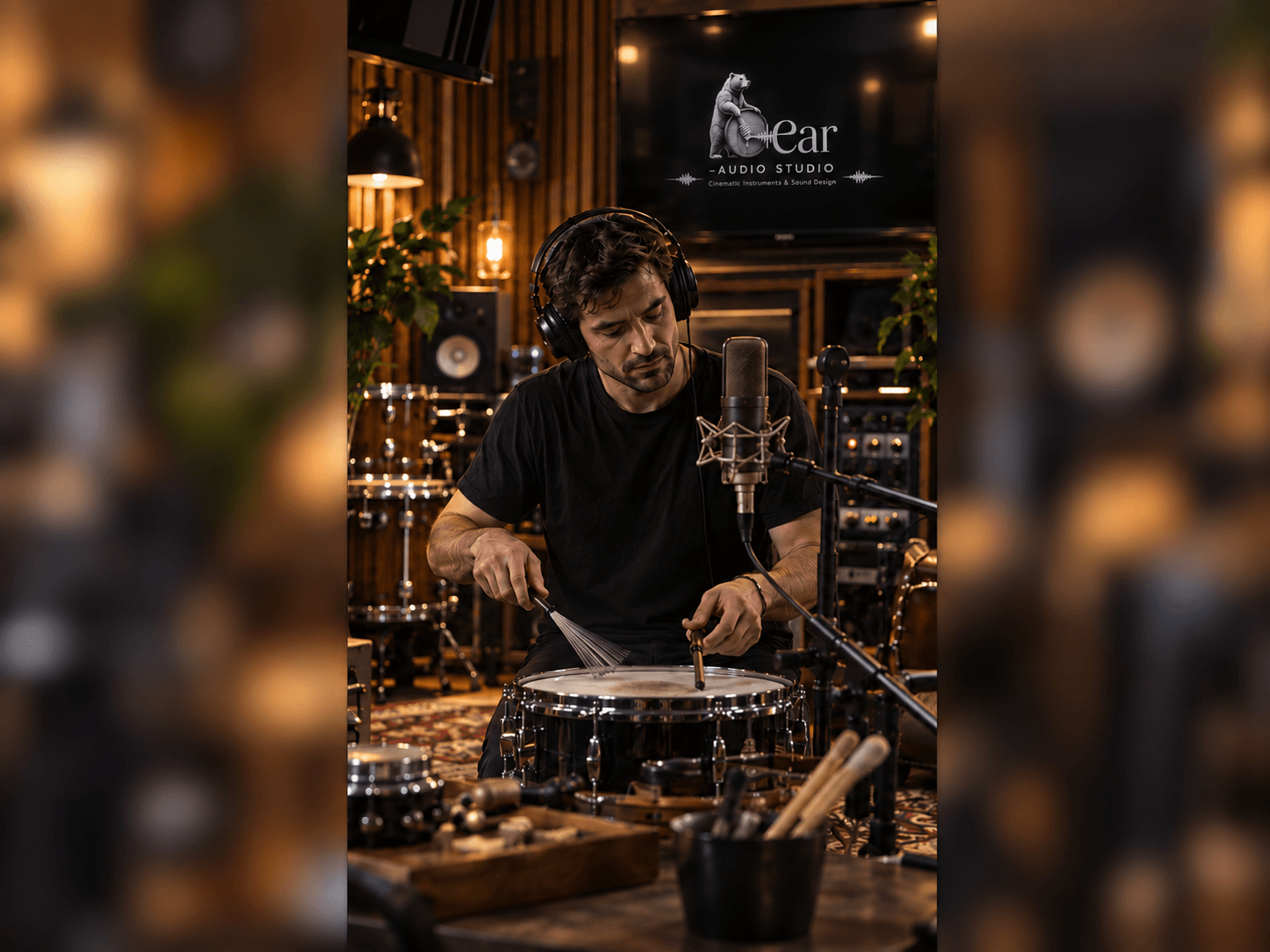
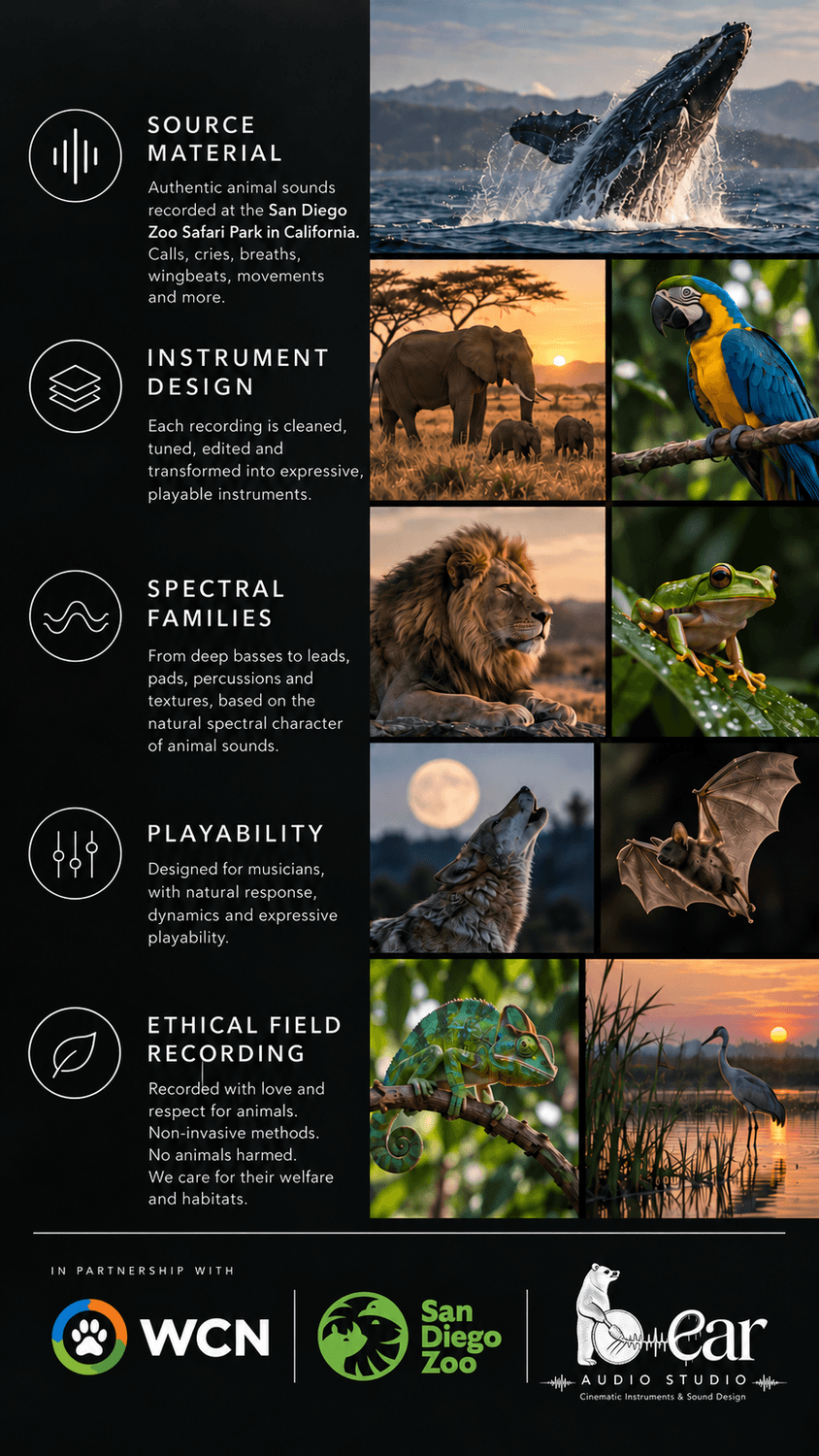
Who recorded the sounds in the library? +
All source sounds used in the library were recorded with
BEAR AUDIO STUDIO company.
Still need help? Contact support ↗
Can I use the sounds in commercial music? +
Yes, subject to the applicable neô EULA. The library may be
used as part of your original musical works, compositions and
productions, including commercial releases, provided the
source samples are not redistributed, resold or made available
as standalone assets.
This FAQ is a practical summary and does not replace the
EULA.
Still need help? Contact support ↗
Can I use the library for film, TV, games or client work? +
Yes, subject to the EULA. You may incorporate the library into
an original production where the sounds form part of a
finished musical or audiovisual work. The raw samples
themselves must not be delivered as a reusable sample
collection or source library.
Still need help? Contact support ↗
Do I owe royalties when I release a track? +
The governing terms are the neô EULA supplied with your
purchase. Where the EULA grants royalty-free use in finished
productions, no additional sample-library royalty is due
solely for incorporating the licensed sounds into that
finished work. Other third-party rights in your project remain
your responsibility.
Still need help? Contact support ↗
Can I resell, share or redistribute the samples? +
No. The license permits use of the sounds inside authorized
finished works; it does not transfer ownership of the source
recordings. Repackaging, extracting, sharing, sublicensing or
reselling the raw samples, instruments or substantially
equivalent source content is prohibited by the EULA.
Legal framework: U.S. 17 U.S.C. §§ 106(1)–(3) and 114; EU
Directive 2001/29/EC, Articles 2 and 4; WIPO Performances
and Phonograms Treaty (WPPT), Articles 11 and 12.
Still need help? Contact support ↗
Can I create and sell my own sample pack from these sounds? +
No. You may not use the library as source material for a
competing sample pack, Kontakt library, preset collection,
loop collection, sound-effects library or other product where
the licensed recordings can be extracted or reused by another
person.
Still need help? Contact support ↗
Can I heavily process a sample and then resell it? +
Processing, layering or transforming a source recording does
not by itself create permission to redistribute it as a
standalone sample. If the resulting file functions as reusable
sample content rather than as part of a finished composition,
distribution is not permitted under the EULA.
Still need help? Contact support ↗
Can I send project stems to a client or collaborator? +
You may deliver finished production stems where the library is
used as part of the musical work, subject to the EULA. Do not
provide raw library files, isolated source samples or a package
that allows the recipient to rebuild or reuse the library
independently.
Still need help? Contact support ↗
Does buying the library transfer copyright ownership? +
No. A purchase grants a license to use the product under the
EULA; it does not transfer ownership of the source recordings,
library files, instrument programming, artwork or other
protected content.
Still need help? Contact support ↗
What laws protect the source recordings? +
Copyright and related-rights rules vary by territory, but the
core rights include control over reproduction and distribution.
Relevant references include
17 U.S.C. §106 and §114 in the United States,
Directive 2001/29/EC Articles 2 and 4 in the
European Union, and WPPT Articles 11 and 12
at international treaty level.
The EULA defines the contractual scope of your library
license. This FAQ is not legal advice.
Still need help? Contact support ↗
Where can I find the EULA? +
The applicable End User License Agreement (EULA) should be
supplied with the product or made available with the purchase
terms. Keep a copy for your records, especially for commercial
or company use.
Still need help? Contact support ↗
Support
What should I include when contacting support? +
Include your order reference, Kontakt version, operating
system, DAW if applicable, storage location and a short
description of the issue. A screenshot of any Kontakt error
message can also help.
Still need help? Contact support ↗
Still need help? +
Use the contact option on this page. The support address is
revealed only after the quick verification step.
Contact support ↗